Camera kit
A solar-powered, night-capable trail camera that talks over your own radio mesh. No cell plan, no monthly fee to see your photos.
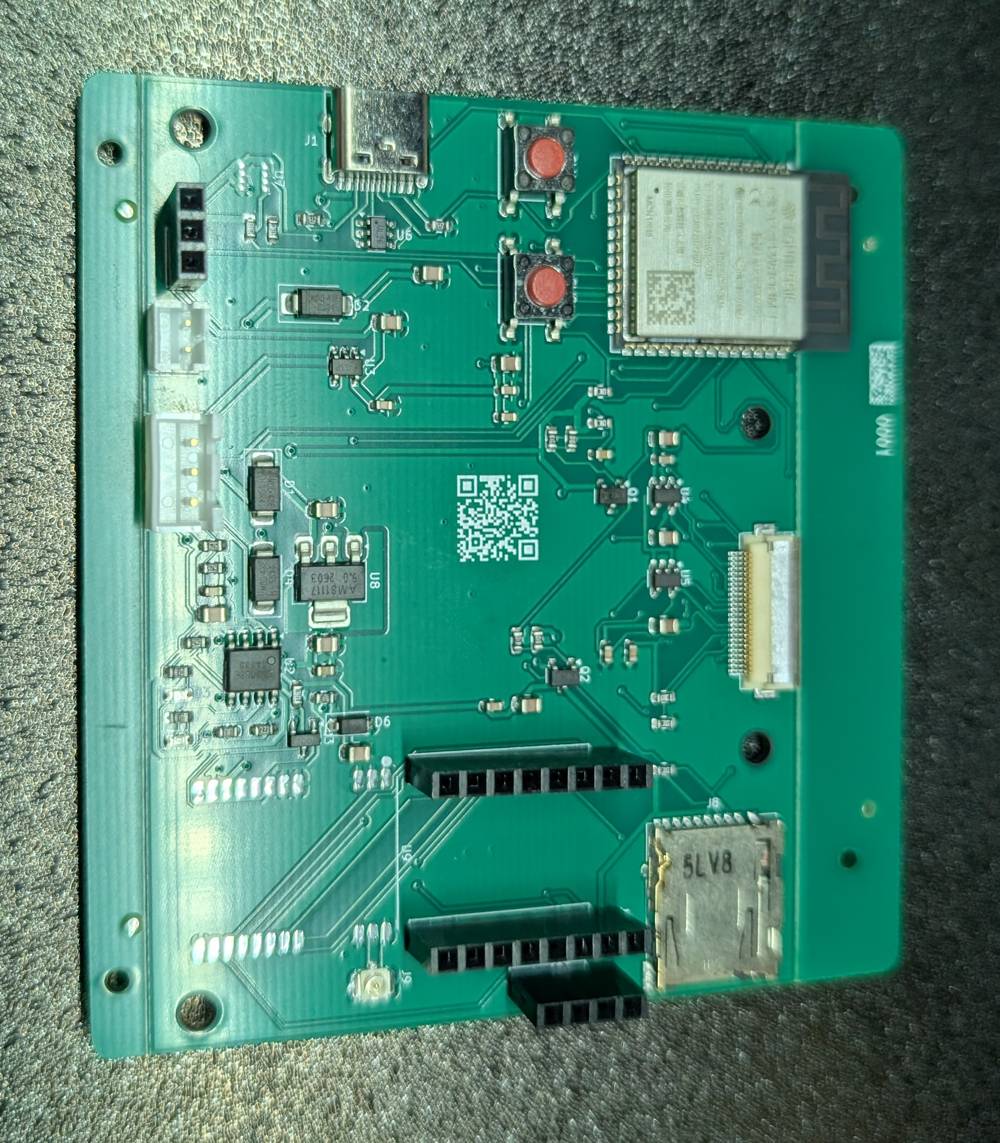
- Assembled camera board, 915 MHz LoRa radio on board
- Camera module (OV2640) — sees at night, 850 nm IR illuminator included
- PIR motion sensor + BME280 environment sensor
- Battery included: tested LiFePO4 cell in a pre-wired, fused harness with temperature sensor
- Antenna + pigtail, 6V solar panel + wiring
- Enclosure port + seal kit: pre-cut lens and IR windows, light-seal foam, neutral-cure silicone, vent + desiccant, spare cable gland
- Pre-flashed, tested, serialized
Card saved now, charged only when it ships. Cancel any time before then for nothing.
How it works
The camera spends nearly its whole life asleep, drawing microamps. Motion wakes it, it takes the picture, and it goes back to sleep. Every full-resolution original is written to the camera's own microSD card and stays there.
What crosses the radio first is a small preview, so you know what walked past within seconds of it happening. When you want the real file, tap Request HD in the app and the full photo follows. The radio decides how fast a photo reaches you, never how good it is.
None of that path touches a cell tower. The 915 MHz LoRa link is your own unlicensed radio network, and it meets the internet only at your gateway — or nowhere at all, if you self-host on the same network.
Night vision is standard
Every MeshCam camera works after dark. An 850 nm infrared illuminator wakes with the camera and lights the scene, the same low-glow band most trail cameras use. Most wildlife moves at dawn, dusk, and dark; there is no day-only model.
Power that takes care of itself
The battery is in the box: a tested LiFePO4 cell in a pre-wired, fused harness with its temperature sensor already mounted, swappable in seconds. The 6 V solar panel and wiring come with it and keep the cell topped up, so there's no monthly charging ritual.
What you still need
A microSD card, and an enclosure. If the card is larger than 32 GB, reformat it FAT32 before you use it — cards that size ship formatted exFAT, which the camera can't read, and a card it can't read looks exactly like a camera that won't turn on. On a Mac: Disk Utility, select the card, Erase, MS-DOS (FAT). Skip the SD Association's “SD Memory Card Formatter” for big cards — it puts exFAT right back. 32 GB and under are usually fine as they come.
We don't ship the weatherproof box: it's an afternoon with a drill, and we publish the build guide before kits ship. The fiddly parts of that build come in the kit — pre-cut acrylic windows for the lens and the IR light, the light-seal foam, the right silicone (neutral-cure; the hardware-store tube crazes the box), a breathable vent with desiccant, and a spare cable gland — so the enclosure job is drill the holes and assemble.
A camera alone isn't a system. To get photos off the property it needs a gateway — add the gateway, take the starter kit, or run the open-source gateway yourself on any computer with an SX1262 module. That guide is included, and the tinkerer path needs nothing else from us.
Specifications
| Radio | 915 MHz LoRa on the unlicensed ISM band — no license, no cell plan, no SIM |
|---|---|
| Camera | OV2640, night-capable, 850 nm IR illuminator included |
| Sensors | PIR motion, BME280 temperature / humidity / pressure |
| Power | LiFePO4 cell (US kits) in a pre-wired fused harness with temperature sensor, plus a 6 V solar panel and wiring |
| Storage | your microSD card, FAT32-formatted; full-resolution originals stay on the camera |
| Antenna | whip antenna and pigtail included |
| Port + seal kit | pre-cut acrylic lens and IR windows, light-seal foam, neutral-cure silicone, ePTFE vent + desiccant, spare cable gland |
| Software | pre-flashed, tested and serialized; firmware, device API and server are open source |
| You add | microSD card (reformat FAT32 if it's over 32 GB), enclosure box, and the tools to build it |
| Ships to | United States (Canada once certified there) |
Ships in the US for now. Firmware, device API, and the web app are open source: self-hosting is free forever and nothing you buy depends on us staying in business. Full shipping and kit terms are on the shop page; range, batteries and offline behaviour are covered in the FAQ. Anything else: hello@getmeshcam.com.
← All products