Camera board
A solar LoRa camera board, flashed and tested, with the antenna in the box. You build the node, we publish how.
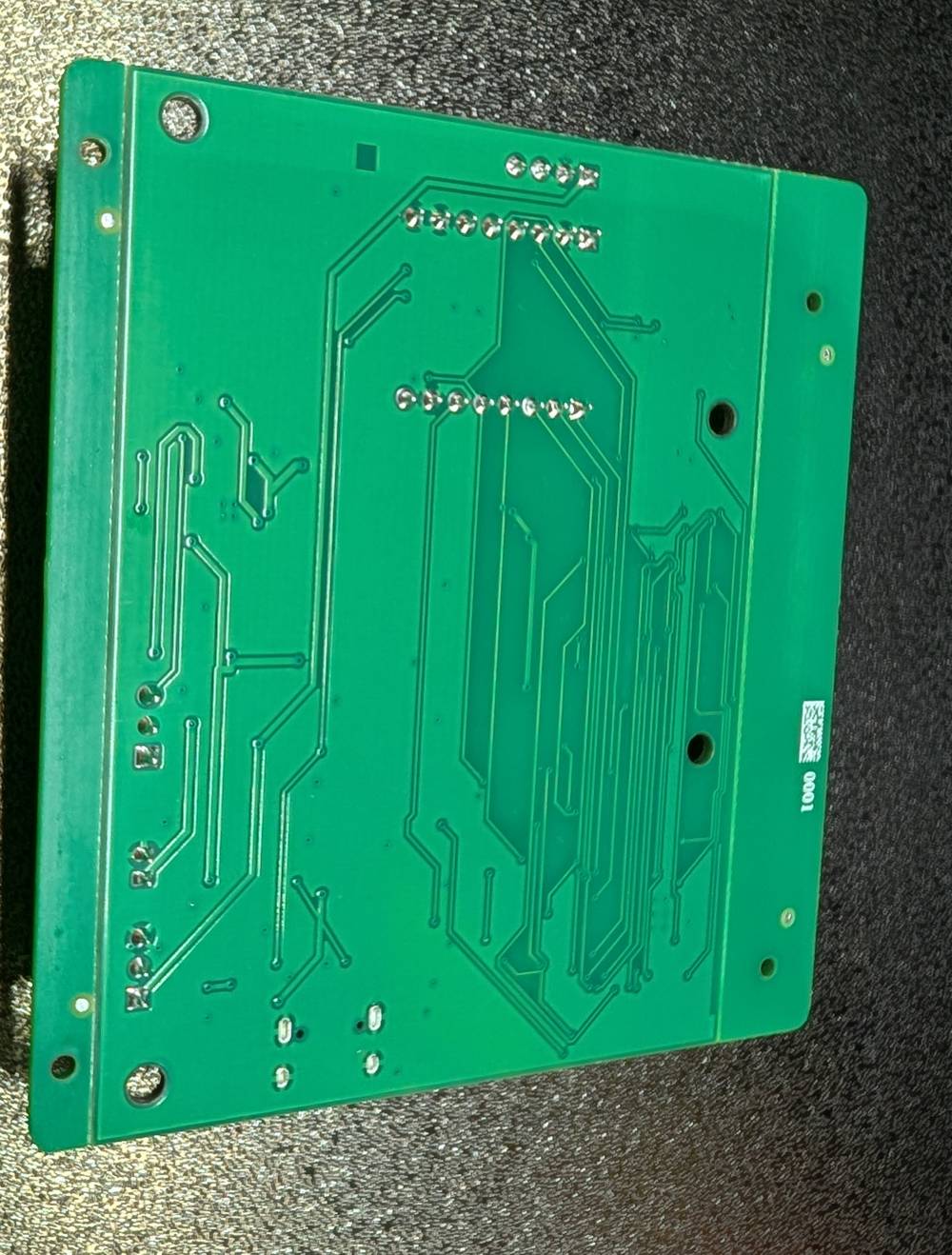
- Assembled board, hardware v1.1: ESP32-S3 with camera connector, 915 MHz LoRa module on board
- Whip antenna and u.FL-to-RP-SMA pigtail in the box
- Solar charge input and on-board LiFePO4 26650 battery bay
- Infrared illuminator drive on the board: a 2-pin socket powers and switches an 850 nm IR array, nothing external to wire
- Sockets for PIR motion sensor and BME280 environment sensor; microSD slot
- Pre-flashed with the open-source firmware, tested, serialized
Card saved now, charged only when it ships. Cancel any time before then for nothing.
What you get
One assembled board, flashed with the MeshCam firmware, powered up and checked against the published first-boot check before it ships, with its serial recorded. The antenna and the u.FL-to-RP-SMA pigtail are in the box, because a radio is sold as a complete system or it is not sold at all.
It doesn't have to become a trail camera. It's an ESP32-S3 with a camera connector, a LoRa radio, a solar-charged LiFePO4 power tree, and microamp deep sleep — flash whatever you want on it. The firmware it ships with is open source, and so are the device API and the server it talks to.
What's on the board
An ESP32-S3 module with an OV2640-style camera ribbon connector, a 915 MHz LoRa module, a microSD slot, and a power section built for unattended solar duty: charge controller with a solar input, an on-board 26650 LiFePO4 bay, and deep sleep measured in microamps. Keyed JST sockets take a PIR motion sensor and a BME280 environment sensor.
Production boards are hardware v1.1, and the infrared drive is on the board. The boost converter and the switch that power an 850 nm IR illuminator live on the PCB, controlled by firmware and off in deep sleep. A 2-pin socket takes the array, so night vision is a plug, not a wiring job. The pilot boards on the bench today are v1.0; the first boards we sell are v1.1.
What you supply
A camera module, the sensors you want, a solar panel, a LiFePO4 IFR26650 cell, a microSD card, and a box to put it all in. We stock the fiddly small parts — the camera module, the environment sensor, and the pre-crimped pigtails — and the build guide names vetted vendors for the panel and the cell. Buy the cell from one of them: the big marketplaces are a counterfeit minefield, and a fake cell is the one part that can hurt you.
Format the card FAT32 if it is larger than 32 GB. Cards that size ship exFAT, which the camera cannot read, and a card it cannot read looks exactly like a board that won't turn on. On a Mac: Disk Utility, select the card, Erase, MS-DOS (FAT). Skip the SD Association's “SD Memory Card Formatter” for big cards — it puts exFAT right back.
The build guide is the other half
We publish the assembly documentation: photos, the off-board parts list with a vendor for each line, wiring, the enclosure build, and the first-boot check. That guide is the product as much as the board is. It is free and public, and it goes up before the first board ships.
A board on its own is not a system either. It reaches the internet through a gateway, and until ours comes back you can run the open-source gateway on any computer with an SX1262 module. That guide is public too.
Support is the community kind
Boards come with the docs, the public firmware and API repos, and a pinout reference. We answer questions about the board. Your soldering, your part substitutions, and your enclosure are yours — that is what buying a board instead of a finished product means.
If a board fails the published first-boot check as it came out of the envelope, it is dead on arrival and we replace it. That promise is on the refund page.
Specifications
| MCU | ESP32-S3 module — WiFi + BLE |
|---|---|
| Radio | 915 MHz LoRa module on board, u.FL antenna connector |
| Antenna | whip antenna and u.FL-to-RP-SMA pigtail included |
| Camera | OV2640-style ribbon connector; module not included (we stock a tested one; see the shop page) |
| Power | solar charge input, on-board 26650 LiFePO4 bay, microamp deep sleep |
| Hardware | v1.1 production revision: infrared illuminator boost and switch on the board |
| Sockets | PIR motion, BME280 environment (keyed JST); 2-pin 850 nm IR illuminator output, driven from the board |
| Storage | microSD, FAT32 |
| Firmware | ships pre-flashed with the open-source MeshCam firmware; bring your own if you'd rather |
| You supply | camera module, sensors, solar panel, LiFePO4 IFR26650 cell, microSD card, enclosure |
| Support | community — docs, public repos, and the build guide |
| Ships to | United States (Canada once certified there) |
Ships in the US for now. Firmware, device API, and the web app are open source: self-hosting is free forever and nothing you buy depends on us staying in business. Full shipping terms and the parts we stock are on the shop page; range, batteries and offline behaviour are covered in the FAQ. Anything else: hello@getmeshcam.com.
← All products